


Chapter I
Vital Signs
power, speed, and what the deck is made of
- Power
- 7.0 / 10
- On par · bracket 4
- Speed
- —
- Difficulty
- —
- Lands
- 39
- of 100
- Avg. MV
- 4.18
- nonland
- Spells
- 61
- nonland
Power is the Analysis tab’s score. The six deck-health scores below are the same ones the deck page and the Familiar use.
50–1
122
153
24
95
186+
Deck health · the same six scores as the deck page
Ramp4.2/ 1017 cards · target 10–12Ramp averages 3 mana. Too much acceleration enters late, which makes the early turns inconsistent.
Card draw7.0/ 107 cards · target 10–127 sources of card advantage (5 repeatable, 2 one-shot) — you will run out of cards before you run out of game.
Interaction4.0/ 104 cards · target 10–124 answers total — not enough to stop the table's best draw.
Board protection9.0/ 109 cards · target 4–89 protection pieces. You are very well defended and light on the thing you are defending.
Win conditions5.0/ 1020 cards · target 2–420 finishers (16 top-end threats, 2 burn/drains, 1 damage multiplier, 1 alternate win) is a lot of top-end for one deck to draw into.
Mana base10.0/ 1039 cards · target 39
Computed from deck data
Chapter II
The Arsenal
the cards that carry the deck
Computed from deck data
Chapter III
Marginalia
the owner's own hand
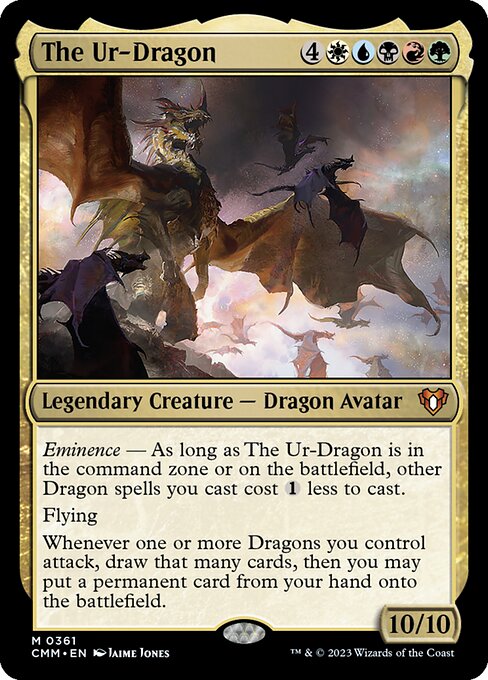
Ramp, cast a dragon, cast another dragon, attack with all of them. Eminence makes them cheaper even while The Ur-Dragon waits in the command zone.
Win Conditions
Written by the deck's owner